

Seasonal Maintenance for Mews House Owners
Why Mews Houses Need Their Own Maintenance Calendar
Mews houses were built for horses, not for the weather, and that inheritance still shapes how they behave in winter. The original stable blocks were tucked behind grand terraces, arranged around tight cobbled courtyards with shared walls, shallow roofs and parapets that hide the guttering from view. Charming, yes. Forgiving, not always.
Because so much of the working detail of a mews house sits just out of sight — behind a brick parapet, under a shared arch, above a narrow passage — small problems are often noticed late. A blocked hopper head discovered in November usually means a damp patch in February. The trick is to work with the seasons rather than against them: a few focused jobs in early autumn, a quick monthly walk-round through winter, and a proper look once the frosts have gone.
Clear the Gutters and Downpipes Before the Leaves Drop
If you do only one job this autumn, make it this one. In most mews properties the guttering is either a parapet gutter hidden behind a low brick wall or a cast iron run tucked under a projecting eaves. Both gather leaves, moss and grit, and both tend to fail quietly.
- Clear parapet gutters in late summer, before the first heavy leaf fall. Feel along the base with a gloved hand — silt settles hard at the low end, near the outlet.
- Check every hopper head, where a downpipe meets the gutter. These clog first and overflow directly onto your brickwork.
- Confirm the fall runs towards the outlet. Standing water in a cast iron gutter will lift the paint and start the metal rusting from within.
- Look at the downpipe shoe at ground level. If it discharges into a gully, lift the grate and clear it; if it simply empties onto cobbles, consider a gully or a splash strip so water is carried away from the wall.
- Fit simple leaf guards to gutter runs under trees. They are cheap, invisible from the courtyard and save a winter of trouble.
Access is the usual obstacle on a mews. Never lean a ladder against a parapet wall without a standoff, and think twice about climbing above a shared arch. For awkward runs, a gutter vacuum or a local roofer with a proper tower is money well spent.
Inspect Brickwork and Repoint Where Water Is Getting In
Old mews brickwork is usually soft, hand-made and laid in lime mortar. That combination works beautifully when water can escape, and fails quickly when it cannot. Frost is the enemy: it gets into a hairline crack, expands, and flicks off the face of the brick.
Walk round the building and look closely at the places water concentrates: below copings, around window reveals and sills, where downpipes are fixed, at quoins and under any stone capping. Tap any hollow-sounding patch of mortar with a screwdriver handle. Small areas of crumbled pointing can be raked out and repointed yourself if you are confident, but use a lime mortar matched to the original — not cement. A hard cement repair traps moisture and spalls the softer bricks around it.
Check flashings and the cement fillet around chimney stacks, and look for cracking above lintels. A hairline crack that has been stable for years is usually benign; one that widens through the winter is a signal to call someone in.
Protect Pipes, Taps and Outdoor Plumbing
Frozen condensate pipes are one of the most common winter call-outs in small properties, and a mews house with the boiler tucked into a former tack room is particularly exposed. Before the first frost:
- Lag every exposed pipe run in a courtyard, lean-to or unheated outbuilding, including the condensate pipe from the boiler.
- Fit an isolating valve to the outside tap and turn it off at the internal stopcock, then open the tap to drain it down.
- Disconnect hosepipes and store them indoors. A trapped length of water will split the pipe and the tap.
- Find your internal stopcock and check it turns. In an emergency you want to know it works — and you want to know where the key is.
- Drain or securely weight water butts before gales arrive, and check external waste pipes from utility rooms for cracks.
Weatherproof Doors, Windows and Small External Spaces
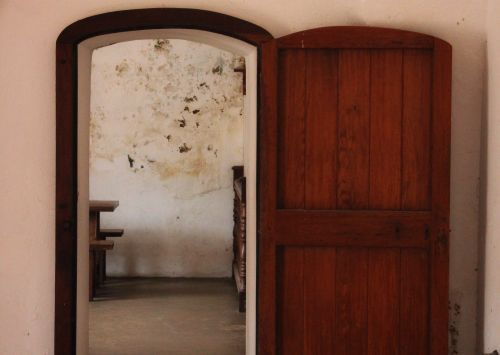
Original stable doors, timber lintels and sash windows need a little attention before the wet season. Check paint or microporous stain on south and west elevations, oil gate hinges and ironwork, and ease any door that has swollen after a damp spell. Replace worn draught strips now rather than in January.
Outside, frost lifts cobbles and setts, so re-bed any that rock and top up jointing sand. Keep airbricks clear — they ventilate your floors — but fit a fine mesh behind them to keep mice out. Terracotta pots crack when water freezes in them: raise them on feet or empty the smaller ones, and group the rest against a sheltered wall.
A Workable Winter Rhythm
Once the autumn jobs are done, the rest is rhythm rather than effort. After every named storm, walk the courtyard and check gutters, gates and any loose coping. Once a month, look at the ceilings and walls inside for new tide marks, and sniff the air in the room below your parapet gutter. In spring, review what the winter exposed and book any repointing or roofing while the weather is kind and the diary is quiet.
Keep a small notebook of what you check and when, and talk to your neighbours if a gutter or downpipe serves more than one property — shared maintenance is easier when it is discussed early. Ten minutes a month is usually all a mews house asks for, and it repays you with decades of quiet, dry, characterful living.
tag: Lifestyle

Oliver Pennington Author
Use light colours, mirrored surfaces, and slim furniture to make a narrow mews living room feel brighter and more spacious.
YOU MAY ALSO LIKE
How to Style a Narrow Mews House Living Room
Sep 26
10Period mews houses often have low ceilings and limited light, so choose warm neutrals or soft greens to create calm.
read more
Choosing Colour Schemes for Period Mews Interiors
Sep 21
10Galley layouts, tall units, and integrated appliances can maximise storage without making a compact mews kitchen feel cramped.
read moreInteriors
-

ERRIC CATONA
Listed mews properties require careful planning, sympathetic materials, and expert advice before you begin any major renovation work.
May 19, 2016 at 5.12 pm
Reply
ERRIC CATONA
Roof lights, internal glazing, and light wells can transform dark mews interiors while respecting the original stable structure.
May 19, 2016 at 5.12 pm
Reply -
ERRIC CATONA
Clear schedules, written contracts, and regular site meetings help keep your mews renovation on time and within budget.
May 19, 2016 at 5.12 pm
Reply
Renovation
Your email address will not be published.